Angle Steel Grandstand: Lightweight Seating That Works Where Heavier Frames Can't
What Makes It Different
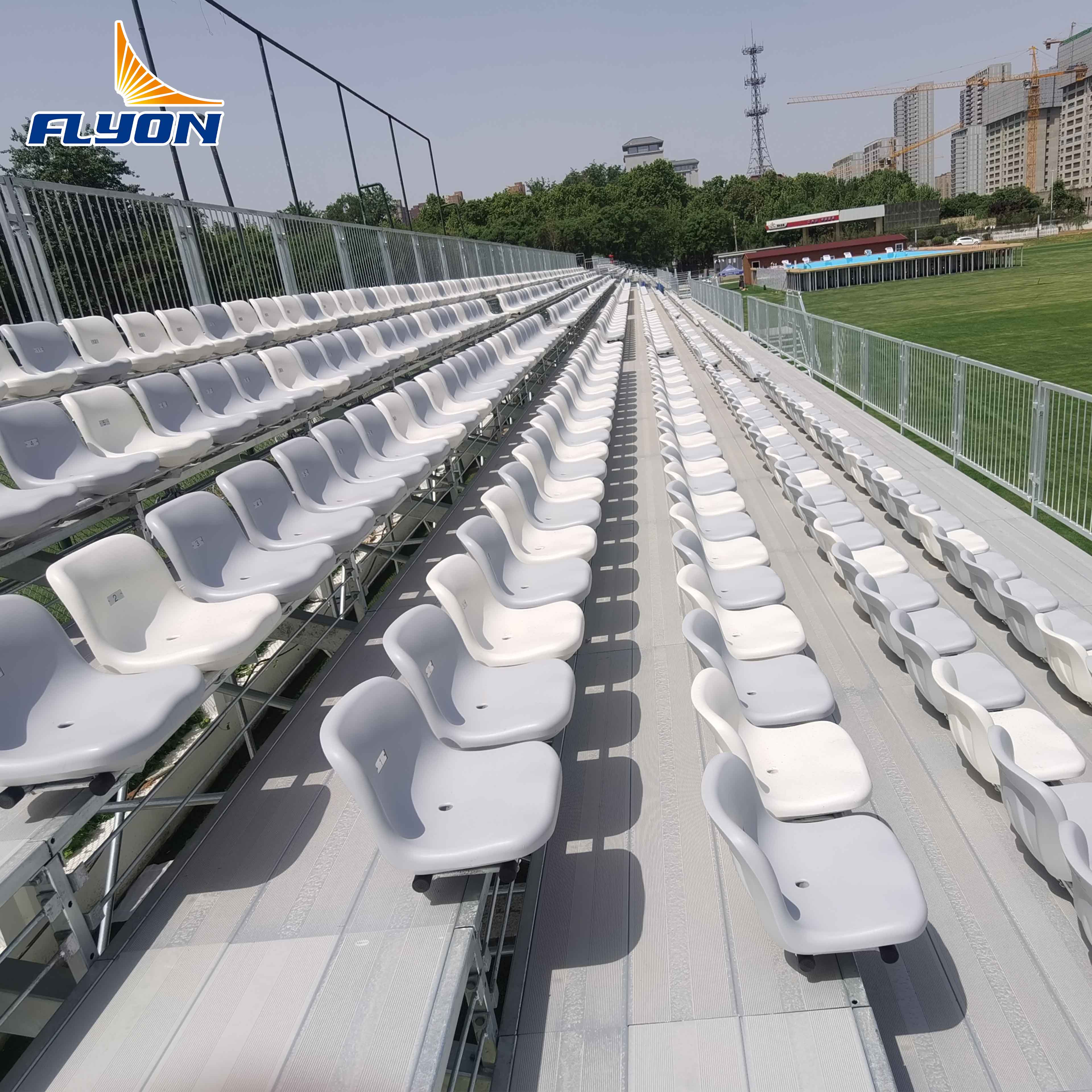
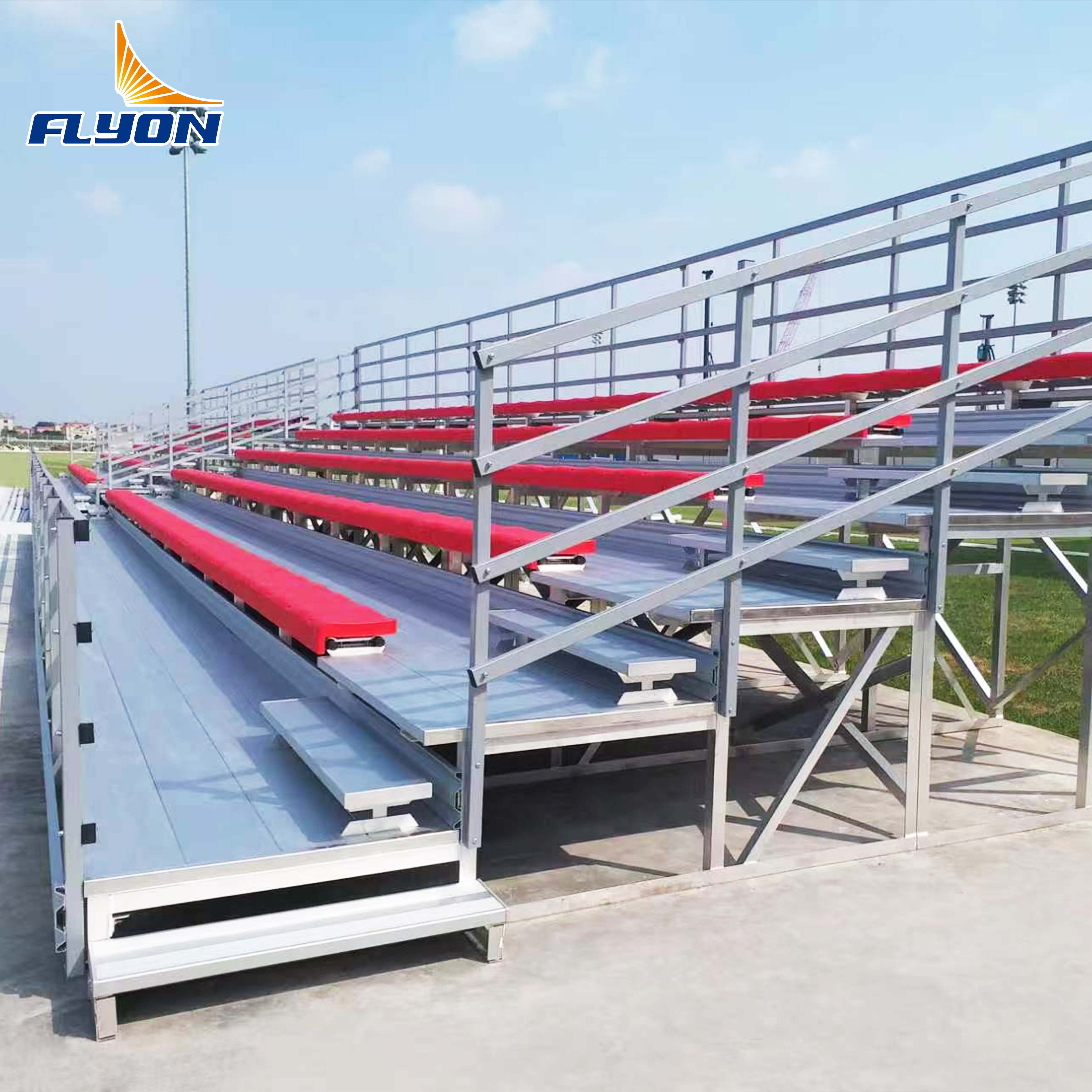
The main frame is welded and assembled from angle steel, with the remaining structural parts steel-made. The result is a frame that is lightweight but structurally sound — good anti-corrosion performance, plus wind and seismic resistance — without the mass of a heavy H-beam system.
Two consequences matter most in practice:
- Large ground contact area. The load spreads across a wide footprint, so the stand suits low-hardness or unreinforced foundations where a concentrated load would need piling or extra concrete work.
- Fast, straightforward assembly. Modular welded sections bolt together on site, which keeps installation short and predictable.
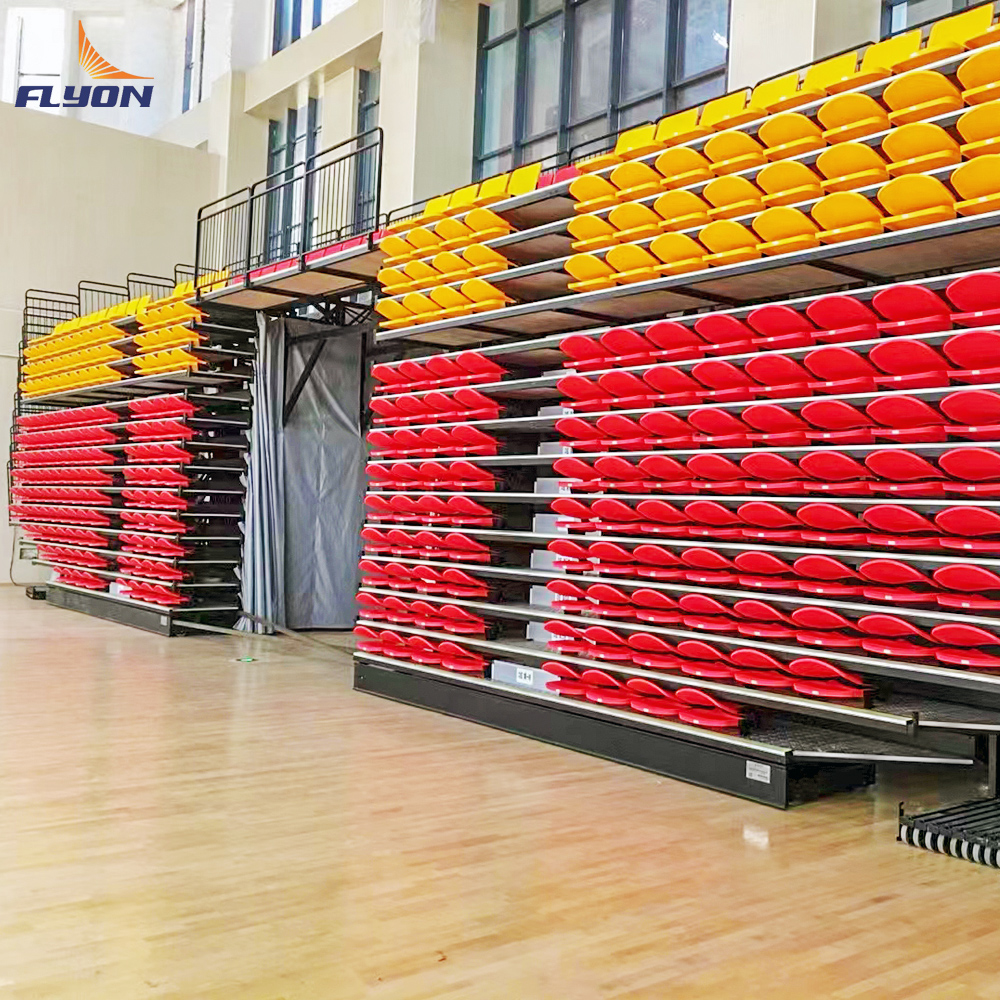
Above the frame: anti-slip anodized aluminum alloy pedals, aluminum seat plates or plastic seats, and guardrails in square tube, round tube or aluminum square tube.
Standard Specifications
| Parameter | Specification |
|---|---|
| Rows | 4 – 8 rows |
| Specification | Customizable to site and capacity |
| Main frame | Welded & assembled angle steel; other parts steel-made |
| Pedal | Anti-slip aluminum alloy, anodized surface |
| Seating | Aluminum seat plates or plastic seats |
| Guardrail | Square tube / round tube / aluminum square tube |
| Features | Lightweight, anti-corrosion, wind & seismic resistant |
| Best fit | Low-hardness foundations, elevated and outdoor venues |
Why Buyers Choose It
It fits the ground you already have. A wide contact footprint means you often avoid foundation reinforcement altogether — frequently the single largest hidden cost in a small grandstand project.
It goes up fast. Light members and bolted connections mean quicker erection, less heavy lifting equipment, and less disruption to a working field.
Anodized pedals last. The walkway takes the hardest wear of the whole structure. Anodizing hardens the aluminum surface and locks in corrosion resistance, while the anti-slip profile keeps grip in wet weather.
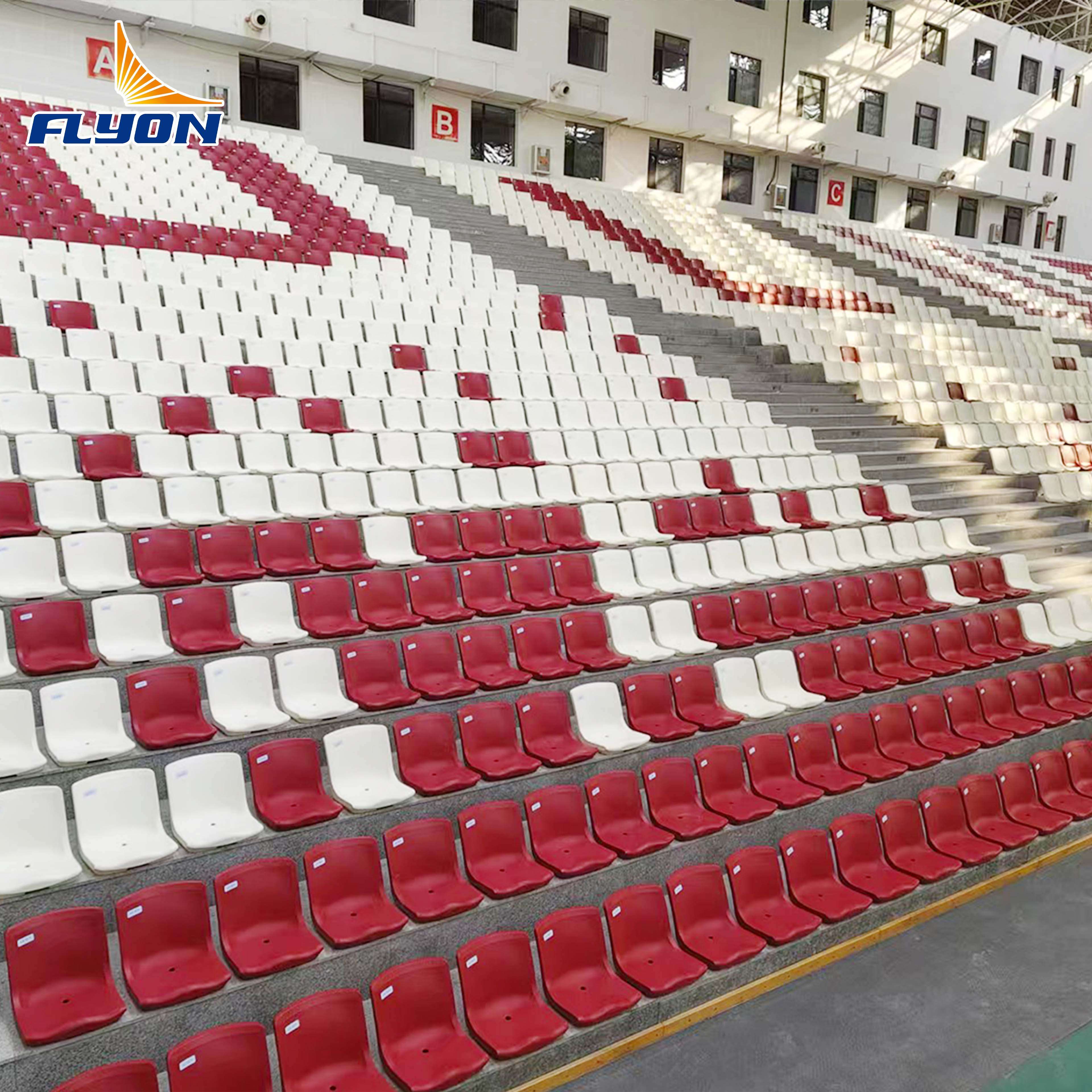
One frame, two seating choices. The same structure accepts aluminum seat plates or moulded plastic seats, so budget, comfort and color branding can be balanced without redesign. Red, blue, green and custom colors are all in routine use on this product line.
Typical Applications
School and college fields · community and municipal sports grounds · training centers and academies · elevated platforms and viewing areas · indoor arenas and sports halls · event and temporary seating.
What to Send for a Quotation
- Site length, depth and ground type
- Target capacity and row count (4–8 rows standard)
- Seating type and color requirements
- Indoor, outdoor or elevated installation
- Access, stair positions and guardrail requirements
We reply with layout drawings and a quotation.
FAQ
How many rows does an angle steel grandstand support? The standard range is 4–8 rows — the sweet spot for schools, training grounds and community venues. Larger capacities are better served by an H-beam system.
Will it work on soft or unprepared ground? Yes — the large ground contact area is designed exactly for low-hardness foundations.
Can it be installed indoors? Yes, it suits indoor arenas and sports halls as well as outdoor fields.
Can seats match our colors? Yes, plastic seats come in a wide range including custom colors.
H-Beam Metal Bleachers: Built for Height, Span and Space
Related Article