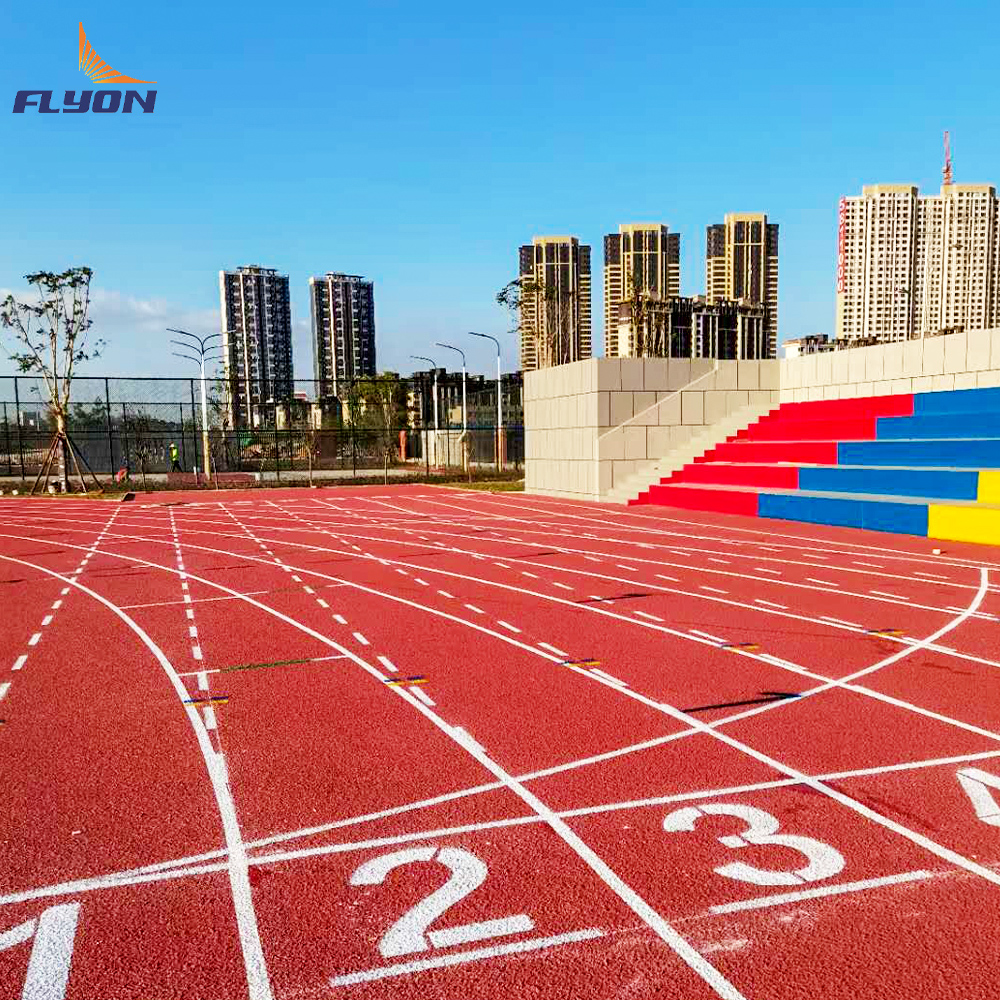
Installation Guide for Runways

I. Site Preparation
- Measurement and Planning
- Measure the area where the runway is to be installed precisely to ensure that the site dimensions meet the requirements of the runway specifications. For example, for a standard 400 - meter runway, its curve radius, straight - track length, etc., all have strict standards (the curve radius is generally 36.5 meters, etc.).
- Plan the drainage system well. The runway should have a certain slope for drainage. Generally, the transverse slope should not exceed 1% and the longitudinal slope should not exceed 0.1%.
- Foundation Treatment
- Remove debris, stones, etc. from the site and level the site.
- If it is a newly - built runway, the foundation treatment needs to be carried out according to the soil condition of the site. If the soil is soft, it may be necessary to compact or lay a foundation reinforcement layer such as crushed stone.
II. Preparation of Runway Materials
- Material Selection
- Select appropriate runway materials according as the usage requirements (such as professional competitions, school physical education teaching, etc.). Common runway materials include plastic runway materials, including mixed - type, breathable - type, etc.
- Check the quality of the materials and check whether there are product qualification certificates to ensure that the materials meet relevant environmental protection and other standards.
- Material Transportation and Storage
- Avoid damage during material transportation. For example, plastic particles should be prevented from getting damp and contaminated.
- Store materials in a dry and well - ventilated place, and different types of runway materials should be stored separately.
III. Installation Process
- Laying of the Bottom Layer (if any)
- For runways that require laying of the bottom layer, evenly lay the bottom - layer materials according to the design requirements. For example, when laying a rubber - particle bottom layer, ensure that the thickness is uniform.
- Laying of the Runway Surface Layer
- Mix the runway surface - layer materials in the specified proportion (for example, plastic runways need to be mixed with glue, etc.), and evenly lay them on the runway foundation using professional construction tools such as pavers.
- During the laying process, pay attention to avoiding defects such as bubbles and cracks, and repair them in a timely manner.
- Marking Drawing
- Draw the starting line, finish line, runway dividing lines, etc. accurately according to the type and standard of the runway. Use special marking paint to ensure that the markings are clear and wear - resistant.
IV. Post - installation Acceptance and Maintenance
- Acceptance
- Check whether the flatness and thickness of the runway meet the standards.
- Test the physical properties of the runway, such as elasticity and friction, to see if they meet the usage requirements.
- Maintenance
- Regularly clean the runway to remove debris, dust, etc.
- Avoid sharp objects scratching the runway, and repair it in a timely manner if there is any damage.
How can we repair the runway?
How can we identify a good running track?